Translate:
SEX AND DISORDERS OF SEX DEVELOPMENT (DSD) (pages 214-216)

THE SEXES: MALE AND FEMALE (page 214)
In classical Greek and Latin, sex is the division of humans by their function in producing and providing subsentence to offspring.
"Males and females not only behave differently in terms of sex, they are evolutionarily programmed to do so" (Oxford News Blog, 2021)
SEX CHROMOSOMES (page 214)
Female: Two X sex chromosomes
Male: One X sex chromosome, one Y sex chromosome

TURNER SYNDROME (page 214)
- One X sex chromosome.
- Clinical features: non-functional ovaries, does not menstruate, infertile, normal intelligence, cardiac abnormalities.
- Overt features include short stature as well as those depicted in the photos: (A) hypertelorism, epicanthic fold, downslanted palpebral fissure and left eye sclerocornea, (B) shield-shaped chest with widely spaced nipples and poor development of breast, (C) neck webbing with low posterior hairline, and (D) abnormal left hand creases and absent proximal flexion crease of the fifth right finger.

KLINEFELTER'S SYNDROME (page 215)
- Two X sex chromosomes and one Y sex chromosome.
- Increased risk of hypotonia, delayed motor skills, impaired intelligence (especially non-verbal compared to verbal IQ), learning difficulties, and endocrine diseases.
- Common overt characteristics: A.- acne, B - decreased amount of body hair, C - immature breasts, gynoid body, musculoskeletal structure and body fat distribution, Male genitalia but often has a micro-penis, small testes and underdeveloped breasts.
JACOBS SYNDROME (page 215)
- One X sex chromosome and two Y sex chromosomes.
- Compared to his siblings, a male with Jacob's Syndrome is very tall in stature (see photo) and his IQ is usually 10 to 15 points lower.
- These patients have an increased risk of learning difficulties, congenital conditions such as night blindness, hypotonia, and delayed motor skills. He is also at increased risk of acne, ADHD or ADD, and behavioral problems - notably impulsivity and an explosive temper.
- Jacob's Syndrome is sometimes referred to as "Superman Syndrome"
48,XXYY SYNDROME
- Two X sex chromosomes and two Y sex chromosomes.
- The patient has male genitalia but may have small testes and/or breast development is in infertile.
- Compared to his siblings, he is tall in stature.
- Increased risk of learning difficulties, impaired intelligence (IQ is typically 70-80 and roughly one-quarter with an IQ below 70), hypotonia, delayed motor skills, impaired coordination, and numerous medical conditions including allergies, asthma, congenital heart defects, diabetes mellitus type 2, inguinal hernia, and intention tremor.
- These patients are prone to impulsivity and/or an explosive temper.
- The photos of a 23-year-old male depict some of the typical physical characteristics: A - tall stature with gynecoid obesity; B - hypertelorism and prominent supraorbital ridges; C - multiple hair whorls and a low posterior hairline; D - low-density facial hair and a pronounced forehead.
SEXUAL ORIENTATION (pages 223-225)

HOMOSEXUALITY (page 223)
- Over 90% of men and women are heterosexual (Balthazart, 2011).
- Research suggests homosexuality is caused by prenatal anomalies, including maternal steroid surges and Sex-specific epigenic-marks (epi-marks)

MATERNAL STEROID SURGES (page 223)
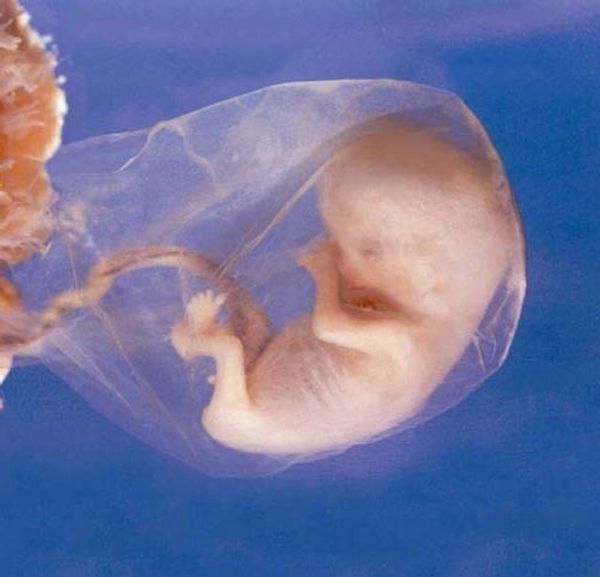
- Pictured is a depiction of a fetus during the 2nd trimester.
- During the intrauterine period in the second half of pregnancy, there may or may not be maternal surges of steroids, particularly testosterone and its metabolites, on the fetal brain.
- If there are steroid surges, the brain develops masculine; if there are not steroid surges, the brain develops feminine.
- If it is a male fetus, there are usually surges. If there are not, then the male may later present with feminine and/or homosexual characteristics.
- If it is a female fetus, there are usually not surges. If there are, then the female may later present with masculine and/or lesbian characteristics.
DNA PACKAGING (page 223)
- Sex-specific epigenic-marks (epi-marks) originate from embryonic stem cells and they vary in strength.
- Epi-marks are temporary switches that regulate gene expression.
- They are produced early in fetal development to protect the fetus from large natural variations in testosterone exposure in the womb.
- However, when they carry over to opposite-sex offspring (father to a daughter or mother to a son), it can cause the masculinization of females or the feminization of males (Rice et al, 2012, 2013)
- Pictured is an 8-week old fetus.
SEX TYPICAL BEHAVIORS (page 223)
- The steroid surges, or lack thereof (and perhaps the epi-marks), can also impact the sex-typical behaviors including playmates, toy preferences and athletics (Hines, 2012).
- This is why some men who are homosexual were perceived to be "girly" when they were young. (Note: Not all boys who are "girly" are gay when they mature into adults.)
- And, why some women who are lesbian were perceived to be "tomboys" when they were young. (Note: Not all tomboys are lesbians when they mature into adults.)
SEXUAL ORIENTATION AND HEALTH: LGB (page 224)
- "In the 1990s, the longstanding bonds between the lesbian, gay and bisexual people in both daily life and liberation activism led to the widespread adoption of the LGB acronym" (Blakemore, 2021, para 10)
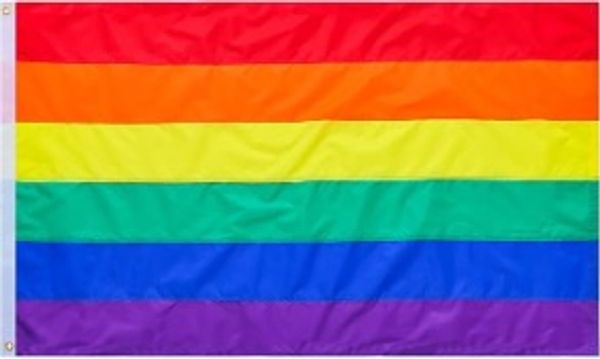
- The LGB "rainbow" flag (pictured) was designed by Gilbert Baker in 1978.

SEXUAL ORIENTATION AND HEALTH: DISPARITIES (page 224)
- Compared to heterosexuals, how is the health of lesbians, gay men, and bisexual individuals in terms of:
- obesity, breast cancer (lesbians), disability, mental illness, substance abuse, and human immunodeficiency virus (HIV)?
PROVISION OF PHYSICAL THERAPY TO LGB PATIENTS (pages 224-225)
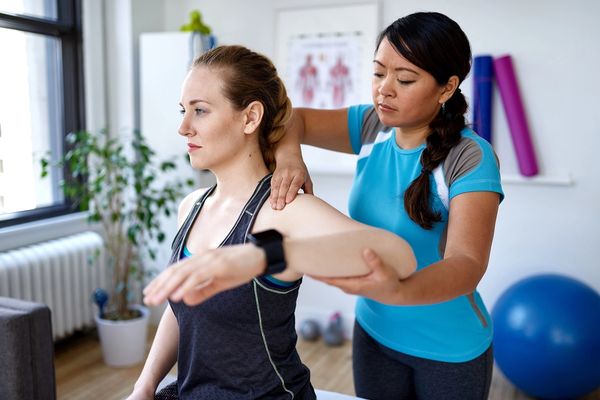
- Stone (2019) found only 1% of physical therapists surveyed ‘fully respect’ LGB people while 85% reported a ‘tolerance’ (rather than a respect) of them.
- Stone (2019) suggests communicating to LGB patients in an inclusive manner. Role-play a part of a PT examination in which a PT is asking his/her homosexual patient questions.

Author: Dr. LaTasha Blanton
LaTasha Blanton, a Doctor of Physical Therapy since 2004, has owned and operated multiple private outpatient facilities since 2009. In 2019, she sold her practices and started a travel and tourism company that allows her to live full time in South Africa. To keep up her skills as a physical therapist, she started a virtual physical therapy practice.
RACIAL DISPARITIES IN MEDICINE
(10 min)


CASE 8-4.1. MRS. DELAND AND HER FAMILY (page 233 )

Describe how you would interact with Mrs. Deland and her family to achieve a positive, yet realistic outcome.
WHAT IF YOUR PATIENT'S BELIEF IS DIFFERENT FROM YOURS?
IS IT OKAY TO PRAY WITH PATIENTS?
Brian Schwartz, MD and Pastor Mark Finley (9 min)
SPIRITUAL WELLNESS
(2 min)
WHY ARE SOME PATIENTS ATHEISTS?
Richard Dawkins, PhD (9 min)

BONUS CASE: Madeline
You are employed as a PT in an outpatient clinic. During the first session with your new patient Madeline, she confides in you that immediately prior to her surgery her orthopedic surgeon (Dr Graham) asked if they could pray for a moment. She reports she nodded and then pretended to pray because she felt vulnerable "in a hospital gown on the operating table" and was concerned he wouldn't "do as good of a job" if she said no. She openly shares with you she is an atheist and had considered reporting Dr. Graham to the AMA, but then decided against it. However, she asks you to recommend another orthopedist because she does not want to return to Dr. Graham. What do you do and say?